

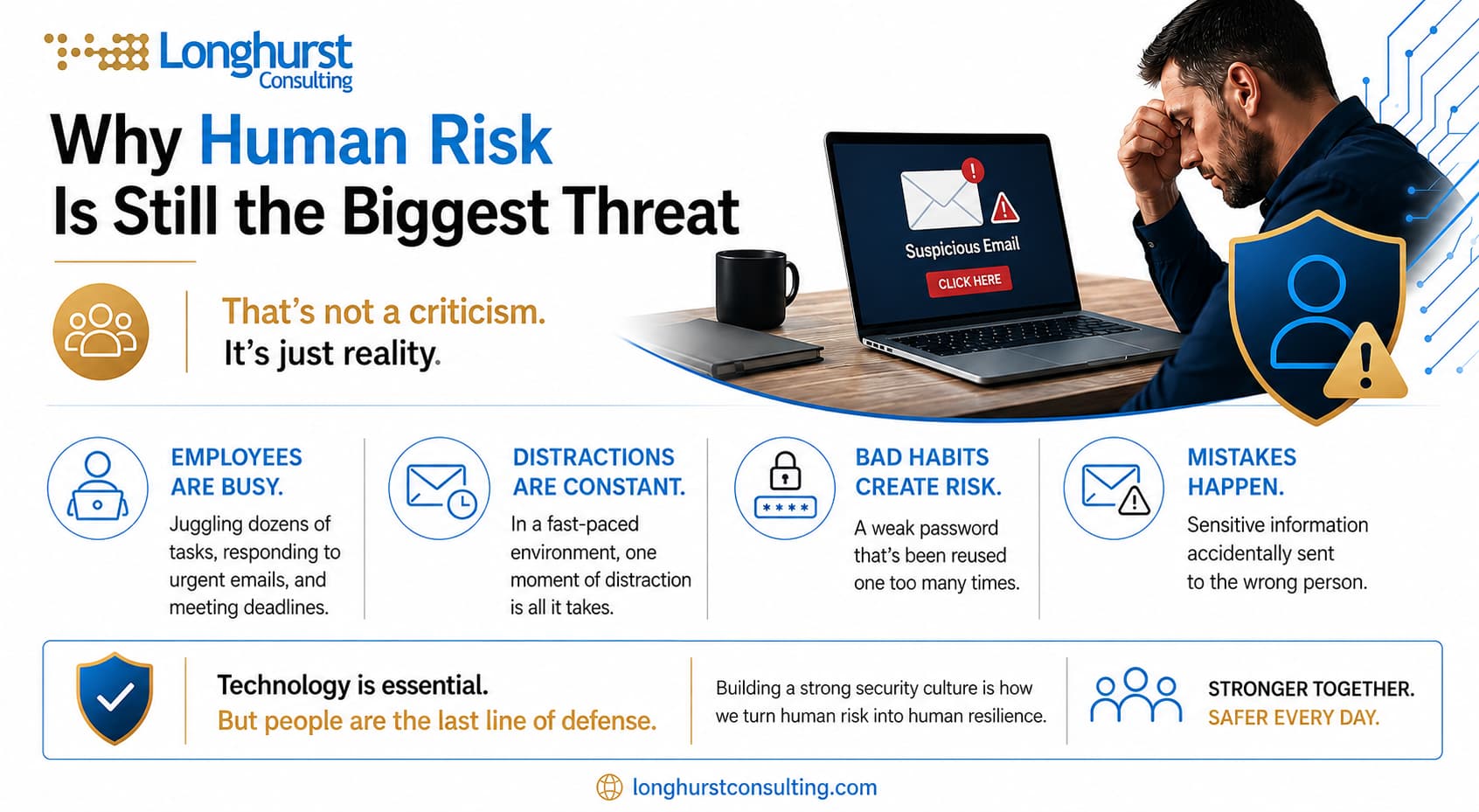
Why Human Risk Is Still the Biggest Threat
Every year, businesses pour money into better cybersecurity tools. Stronger firewalls. Smarter email filters. More advanced security platforms. And yet, despite all of that progress, the thing most likely to cause a security incident isn’t a software vulnerability or a sophisticated attack it’s a person having a bad day and clicking the wrong link.
That’s not a criticism. It’s just reality.
Employees are busy. They’re juggling dozens of tasks, responding to urgent emails, and logging into systems from their laptop, their phone, sometimes a hotel Wi-Fi. In that environment, one moment of distraction is all it takes. A convincing phishing email. A weak password that’s been reused one too many times. Sensitive information accidentally sent to the wrong person.
Attackers know this. In fact, they count on it. It’s often far easier to trick a tired employee than to break through a well-secured system.
So What Actually Helps?
The good news is that you don’t need a massive overhaul to make a real difference. Some of the most effective improvements are surprisingly straightforward.
Awareness training is at the top of the list. When employees know what a phishing attempt looks like, or can spot an unusual login request, they become your first line of defence rather than your biggest vulnerability. The key is keeping it simple and ongoing not a one-time compliance exercise that everyone forgets by Friday. Simulated phishing campaigns and ongoing cybersecurity awareness initiatives can help organizations identify risks before they become incidents and reinforce the security habits employees need every day.
Password habits matter more than people realise. Weak or reused passwords are still one of the most common ways attackers get in. Encouraging strong passwords and enabling multi-factor authentication wherever possible adds a layer of protection that stops a lot of threats before they start.
Clear reporting processes are also huge. If an employee spots something suspicious but isn’t sure what to do, they might hesitate and that hesitation costs time. When people know exactly who to contact and feel comfortable raising concerns without judgment, your team can move fast and often catch issues early.
Regular access reviews are worth building into your routine too. Over time, employees accumulate permissions they no longer need. A quick review of who has access to what based on their actual role helps close off unnecessary exposure before it becomes a problem.
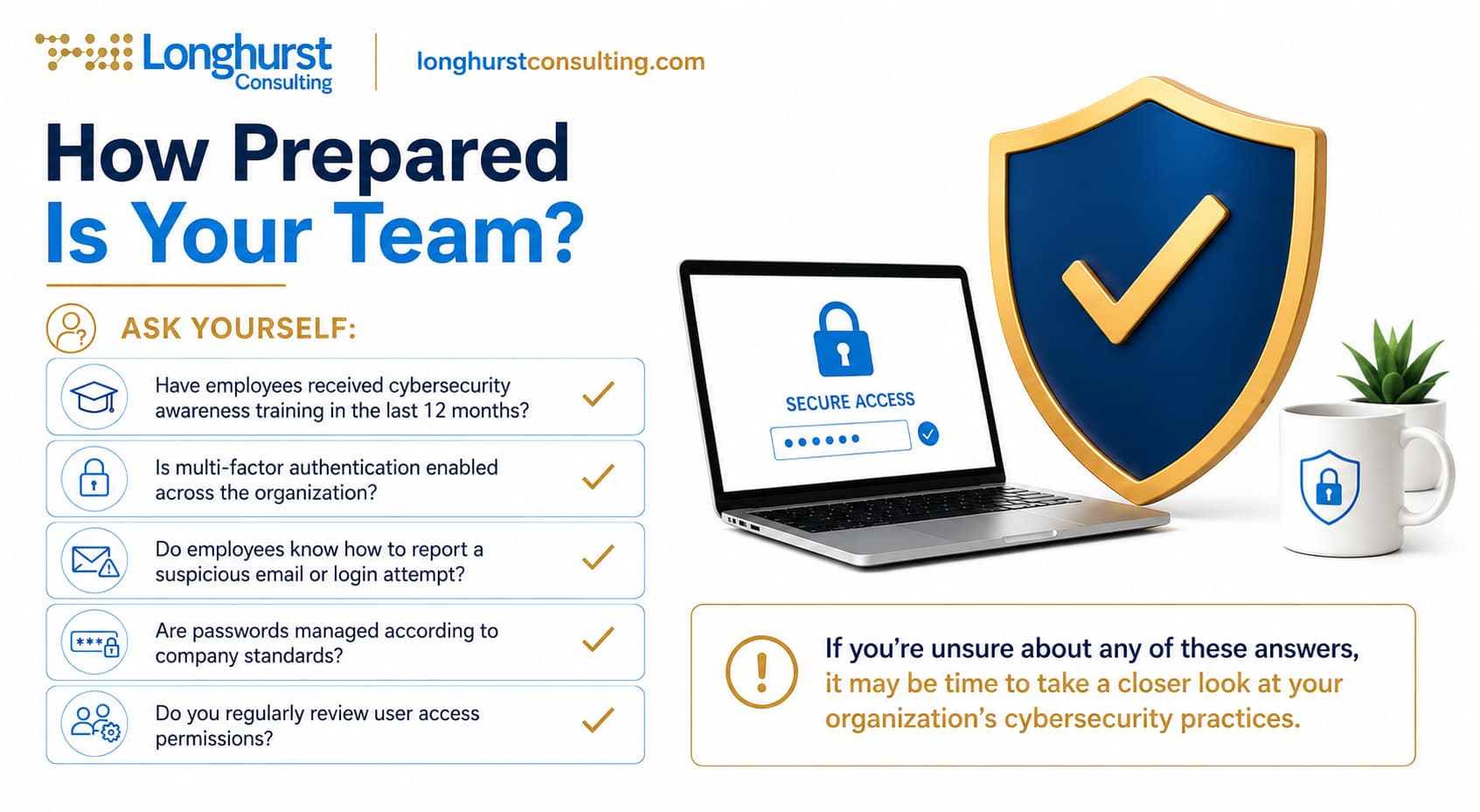
How Prepared Is Your Team?
Ask yourself:
- Have employees received cybersecurity awareness training in the last 12 months?
- Is multi-factor authentication enabled across the organization?
- Do employees know how to report a suspicious email or login attempt?
- Are passwords managed according to company standards?
- Do you regularly review user access permissions?
If you’re unsure about any of these answers, it may be time to take a closer look at your organization’s cybersecurity practices.
It’s About Culture, Not Just Tools
Here’s the shift that makes all of this stick: when you invest in awareness, you’re not just reducing risk you’re building confidence.
Employees feel more prepared. They stop worrying about accidentally causing an incident and start actively paying attention. Security becomes something the whole team is part of, not just something IT handles in the background.
Businesses that build this kind of culture tend to have fewer incidents, and when something does happen, they respond faster because people already know what to do.
No technology can fully eliminate the human element. But with the right habits, clear processes, and a team that understands what to look out for, you can dramatically reduce your exposure.
If you haven’t revisited your awareness training lately, it’s worth putting it on the agenda. It’s one of the simplest, most cost-effective steps you can take, and it tends to make a bigger difference than most people expect.
Not sure how well-prepared your team really is? Let’s talk. Longhurst Consulting helps organizations assess and strengthen their human cybersecurity defenses. A conversation today could prevent a serious incident tomorrow.