

Having Backups Is Great. But Do We Actually Know They Work?
Most of us know we need backups. Customer data, financial records, project files, the stuff that keeps the business running. We set up a backup solution, it runs quietly in the background, and we move on feeling like that box is ticked.
The problem is that a backup nobody has ever tested is just a hope. When a ransomware attack hits, a server fails, or someone accidentally deletes something critical, the question is not whether a backup exists. The question is whether it works when we need it most.
We have seen businesses find out the hard way that those are two very different things.
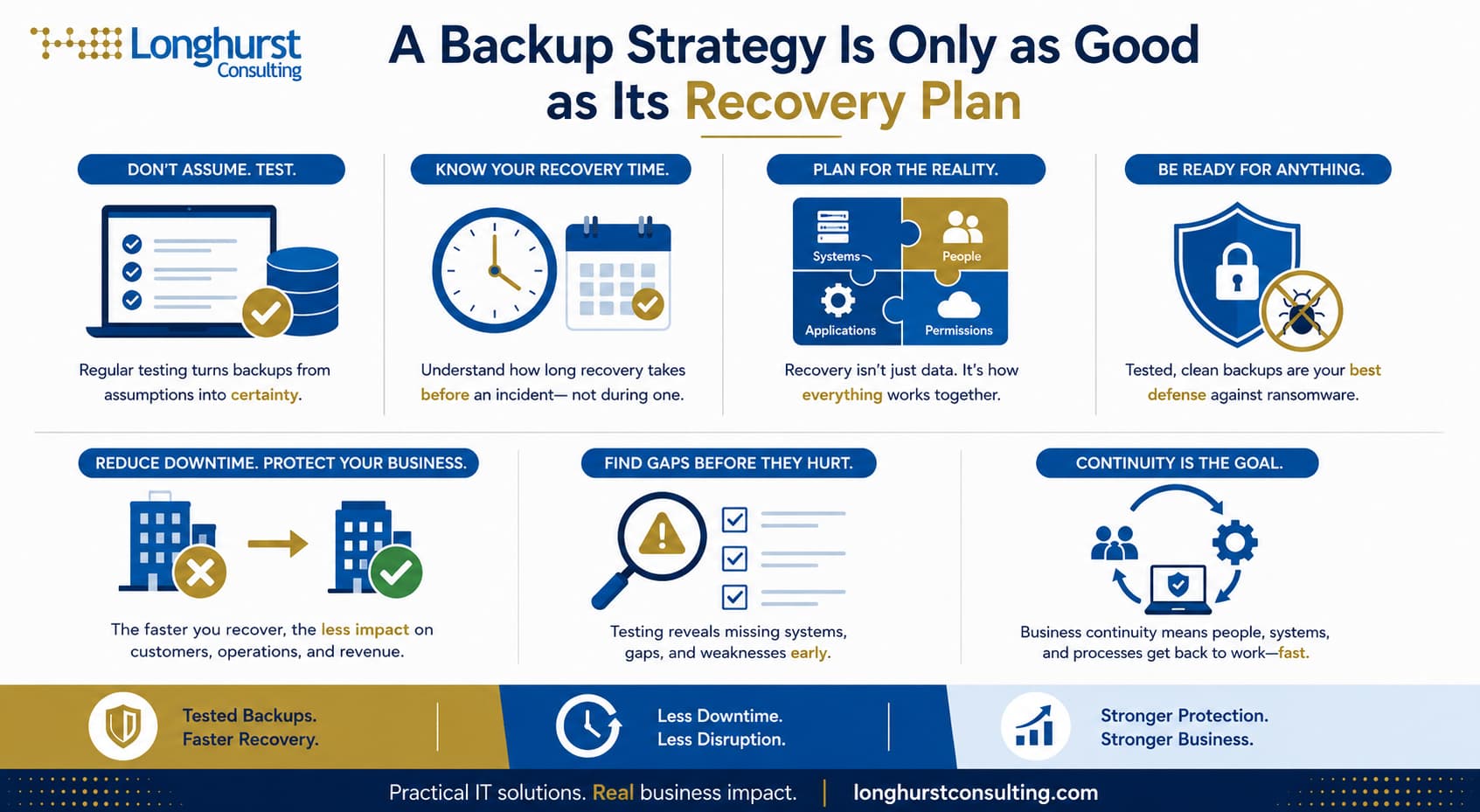
A Backup Strategy Is Only as Good as Its Recovery Plan
The uncomfortable truth is that most backup problems stay hidden until an incident forces them into the open. Files turn out to be incomplete. Recovery takes three times longer than expected. An entire system was never included in the backup schedule to begin with. None of this shows up until something goes wrong, and by then the pressure is already on.
Regular testing changes that. It moves backup and recovery from something we assume is working to something we know is working. And that distinction matters enormously when the business is on the line.
Recovery time is one of the most important things to understand before an incident happens, not during one. Even if data can be restored successfully, how long will it take? For most businesses, being offline for several days is not a realistic option. Employees cannot work, customers cannot be served, and operations grind to a halt. Testing gives us a clear, honest picture of how quickly we can get back on our feet.
Imagine arriving Monday morning to discover your primary server has failed. If it takes four hours to recover, the impact may be manageable. If it takes four days, customer service, operations, and revenue can all be affected. Understanding that difference before an incident occurs helps businesses make informed decisions about risk and recovery.
It also helps us understand dependencies we might not have thought about. Restoring a file server sounds straightforward until we realise that staff also need connected applications, permissions, and cloud services to do their jobs. A proper recovery plan looks at how everything fits together, not just individual pieces in isolation.
This is where business continuity planning becomes important. The goal is not simply recovering data. It is ensuring people, systems, and processes can return to normal operations as quickly as possible.
Cybersecurity threats make all of this even more pressing. Ransomware attackers often target backups specifically because they know that is what businesses rely on to recover. Knowing we have clean, tested, recoverable backups is one of the most powerful positions we can be in if an attack occurs. It is the difference between a disruption we can manage and a crisis we cannot.
What Confidence Actually Feels Like
There is a real difference between hoping our backups will work and knowing they will. Regular testing gives leadership and the wider team genuine peace of mind because recovery processes have been validated, documented, and refined. If something goes wrong, everyone knows what to expect and how to respond.
Testing also tends to surface improvements we would not have found otherwise. Shorter recovery times, stronger backup schedules, better protection for the data that matters most. Each round of testing makes the whole organisation more resilient.
The goal was never just to store copies of data. The goal is to make sure the business can keep running when something unexpected happens. Backups are an essential part of that, but only when we know they work.
If we cannot remember the last time our backups were tested, that is probably the most important thing we can do this week. A simple test today could be the difference between a minor disruption and a very bad few days.
At Longhurst Consulting, we help organizations assess backup readiness, test recovery processes, and build practical business continuity plans. Our goal is to ensure that when something unexpected happens, your team knows exactly what to do and how quickly recovery can occur.
Ready to find out if your recovery plan is ready? Get in touch and we will help you test, review, and strengthen your backup strategy before you ever need to rely on it.