

Hybrid work has changed, and for most businesses, that’s not going back. Employees are splitting time between home and the office, jumping between job sites, or working remotely full time. Flexibility has stopped being a perk and become just… how work happens.
That’s mostly a good thing. But it comes with a catch.
A lot of businesses have embraced flexible work without putting the right foundation underneath it. The flexibility part is easy it’s the structure behind the scenes that tends to get skipped. And when that happens, what should be a smooth operation starts to show cracks: people can’t reliably access what they need, security gaps appear, and IT teams end up firefighting instead of planning.
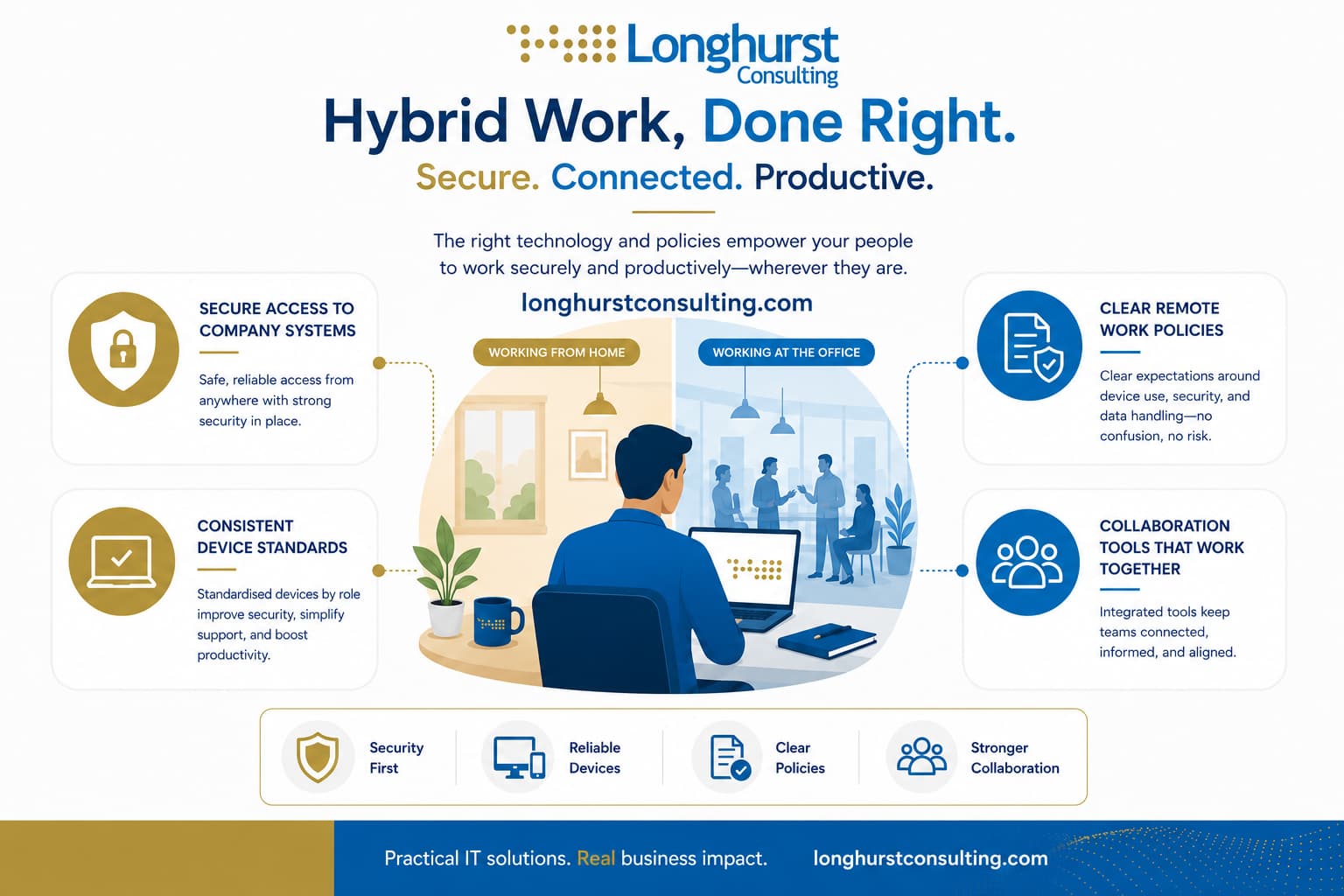
The Pieces That Actually Matter
Getting hybrid work right doesn’t require a complete overhaul. But there are a few things that genuinely make a difference.
Secure access to company systems is the starting point. Solutions such as Microsoft 365, multi-factor authentication, endpoint protection, and secure remote access tools help ensure employees can work safely from anywhere.
Consistent device standards save a surprising amount of headache. When everyone is using different hardware or unsupported personal devices, supporting those systems becomes a nightmare and security gaps multiply. Standardising devices by role gives employees the right tools, makes IT support far more efficient, and gives leadership a clearer picture of what’s running across the business.
Clear remote work policies fill in the gaps that technology alone can’t cover. People should know what’s expected around device use, password practices, file sharing, and handling sensitive information outside the office. It doesn’t need to be a dense policy document just clear, practical guidance that removes ambiguity.
Collaboration tools that work together are worth more than people realise. When teams are scattered across locations, the last thing they need is to waste time hunting for files, switching between five different platforms, or missing messages buried in the wrong app. A well-integrated modern workplace setup keeps communication consistent and stops small frustrations from piling up.
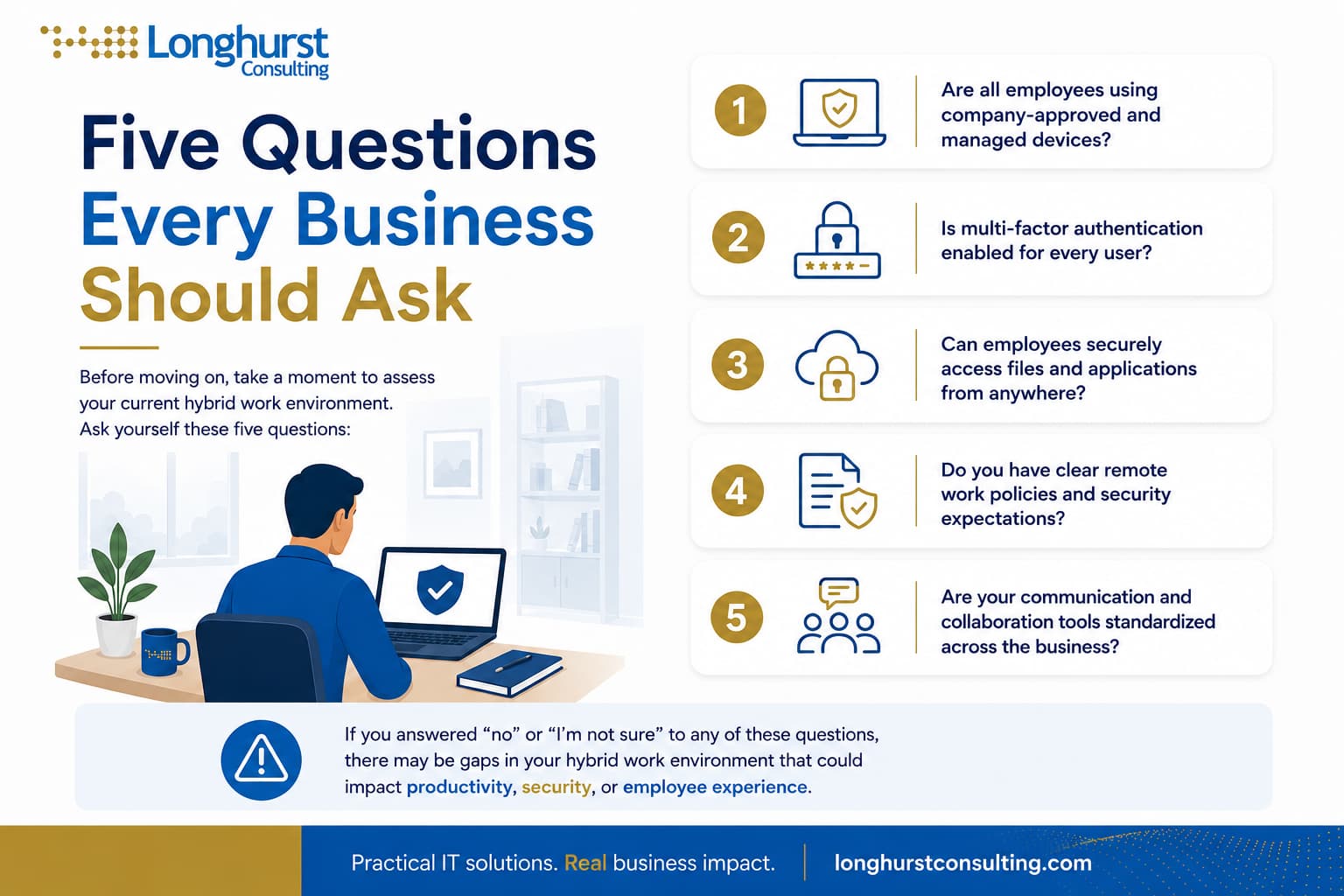
Five Questions Every Business Should Ask
Before moving on, take a moment to assess your current hybrid work environment. Ask yourself these five questions:
- Are all employees using company-approved and managed devices?
- Is multi-factor authentication enabled for every user?
- Can employees securely access files and applications from anywhere?
- Do you have clear remote work policies and security expectations?
- Are your communication and collaboration tools standardized across the business?
If you answered “no” or “I’m not sure” to any of these questions, there may be gaps in your hybrid work environment that could impact productivity, security, or employee experience.
What Good Looks Like
When hybrid work is set up properly, the difference is noticeable quickly. IT issues decrease, onboarding becomes easier, security risks are reduced, and employees spend less time troubleshooting technology and more time serving customers.
Teams stay more connected because the tools and processes work the same way regardless of where people are. And leadership gets something genuinely valuable: confidence that remote work is running within a structured, secure framework rather than hoping for the best.
The businesses that struggle with hybrid work usually aren’t struggling because remote work is inherently difficult. They’re struggling because the setup was never quite finished basic access was sorted, but the policies, device standards, and collaboration tools never quite came together.
Hybrid work isn’t a temporary arrangement anymore. For most organisations, it’s a long-term reality. Treating it like one with proper planning, reliable tools, and clear expectations makes a real difference to how smoothly everything runs day to day.
If you haven’t reviewed your remote work setup recently, it’s worth a look. Often, it’s the smaller gaps an inconsistent security policy here, a patchwork of collaboration tools there that cause the most friction. Sorting those out tends to pay off faster than you’d expect.
Get in touch with us today and let’s make sure your hybrid work setup is secure, consistent, and built to last.