

Are We Running Our IT, or Is Our IT Running Us?
Most businesses start their technology journey the same way. A computer fails, so we replace it. A server hits its limit, so we buy an upgrade. A security issue pops up, so we bolt on a new tool. It feels like progress in the moment, but over time it creates a cycle where every technology decision is driven by urgency rather than intention.
And the thing is, that approach works fine when a business is small and technology is simple. But as organizations grow, technology becomes woven into everything: productivity, customer service, security, profitability. At that point, constantly reacting to problems starts costing us more than we realise.
Technology is no longer just about keeping systems running. It plays a direct role in how efficiently teams work, how well customers are served, and how confidently organizations can grow. The right technology strategy helps remove barriers, improve productivity, and create a stronger foundation for future success.
The businesses that get the most out of their technology tend to make a shift. Instead of asking “how do we fix today’s problem?” they start asking “how can technology help us get where we want to go?”
What Happens When We Stop Reacting and Start Planning
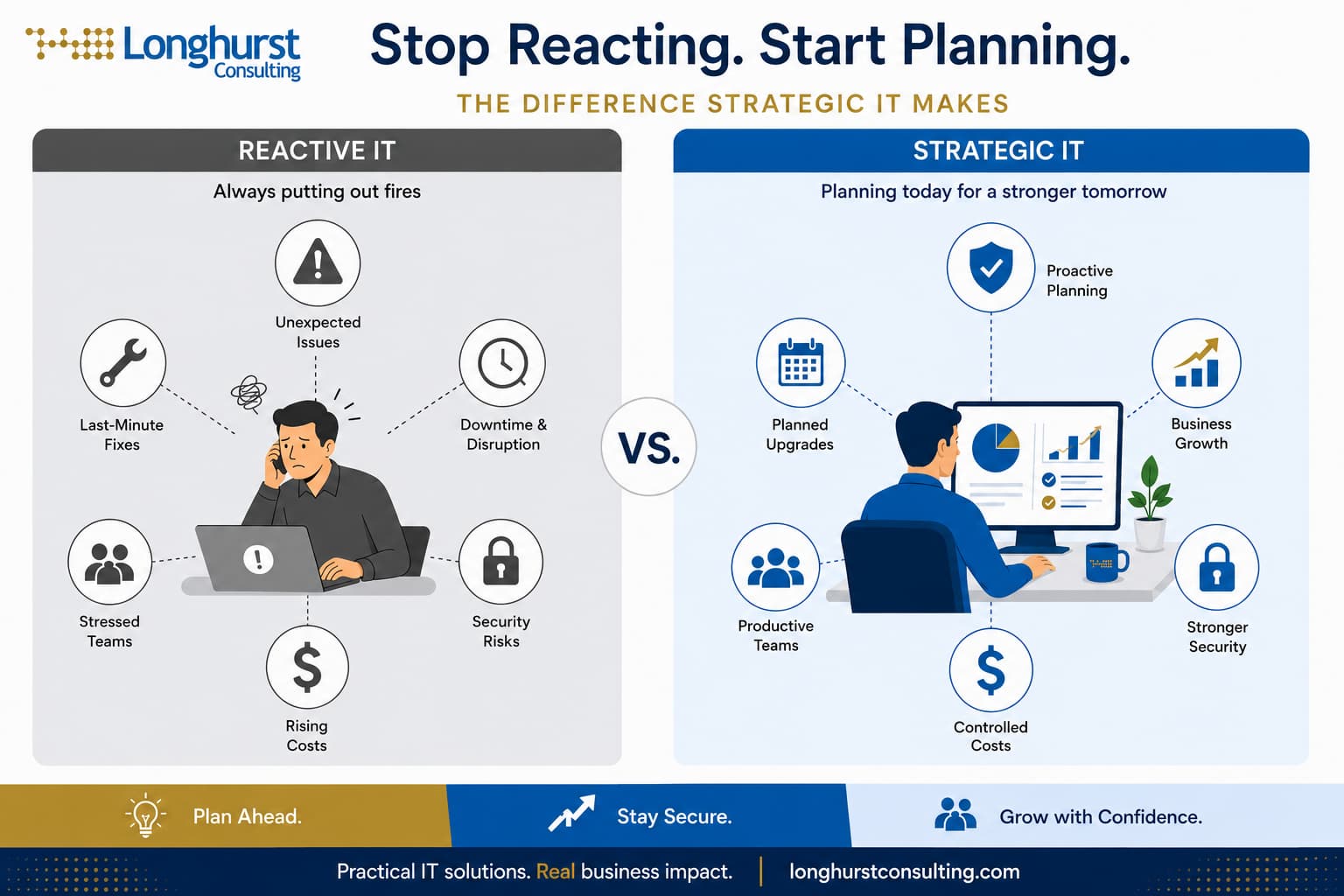
Reactive IT is expensive in ways that are easy to underestimate. Emergency upgrades, unexpected equipment failures, unplanned downtime, security incidents – the costs add up quickly and they almost always arrive at the worst possible time. Beyond the budget impact, these situations put leadership and staff under pressure and force decisions that probably would have been made differently with more time and information.
Strategic IT works differently. It starts with understanding where the business is heading and then makes sure technology is set up to support that journey. Risks get identified before they become problems. Upgrades get planned rather than rushed. Investments get made based on what the business needs rather than what just broke.
The practical difference this makes is significant. If we are planning to grow over the next few years, we can evaluate whether our infrastructure can handle more users, more locations, and heavier workloads before the strain shows up. If cybersecurity is a growing concern, we can build a proper security plan and budget for it before something goes wrong. If our teams are slowed down by clunky tools or inconsistent workflows, we can address that thoughtfully rather than squeezing it in between other emergencies.
For example, a company planning to hire 10 new employees over the next year may discover that its network, security controls, software licensing, or support processes are not ready to scale. Identifying those gaps early allows the business to budget appropriately, avoid disruption, and support growth with confidence.
One of the biggest benefits is what it does for our budget. Instead of absorbing unexpected costs throughout the year, we gain visibility into what is coming, when it is coming, and what it will cost. That kind of predictability makes planning a lot easier and eliminates a lot of unpleasant surprises.
Building a Roadmap That Actually Reflects Where We Are Going
Moving from reactive to strategic IT does not mean ripping everything out and starting fresh. For most businesses, it starts with getting a clear picture of where things stand today and mapping out what needs to change to support where we want to be.
That means reviewing current systems, infrastructure, security practices, and business goals. It means being honest about what is working, where the risks are, and where the right improvements could genuinely move the needle. From there, priorities can be shaped into a realistic plan that fits both our operational needs and our budget.
A good technology roadmap creates clarity across the whole organisation. Everyone understands what is being worked on, why it matters, and when it will happen. Projects stop being driven by crises and start being driven by strategy. Spending becomes more predictable. Disruptions become less frequent. And leadership can focus on running the business rather than worrying about what might break next.
Technology is no longer just an operational necessity for most businesses. It is one of the core assets that determines how well we can grow, compete, and serve our customers. Treating it that way, with a proper plan behind it, makes an enormous difference to how smoothly everything runs.
If technology conversations are focused more on solving recurring issues than supporting future goals, it may be time to take a more strategic approach. A clear technology roadmap can transform IT from a source of uncertainty into a tool that supports growth, productivity, and long-term success.
At Longhurst Consulting, we help organizations align their technology investments with their business goals. Through strategic planning, technology roadmaps, and ongoing advisory services, we help clients reduce risk, improve efficiency, and prepare for growth with confidence.
If you would like a clearer understanding of where your technology stands today and where it needs to go tomorrow, we’d be happy to start that conversation.